
By Teniola Longe
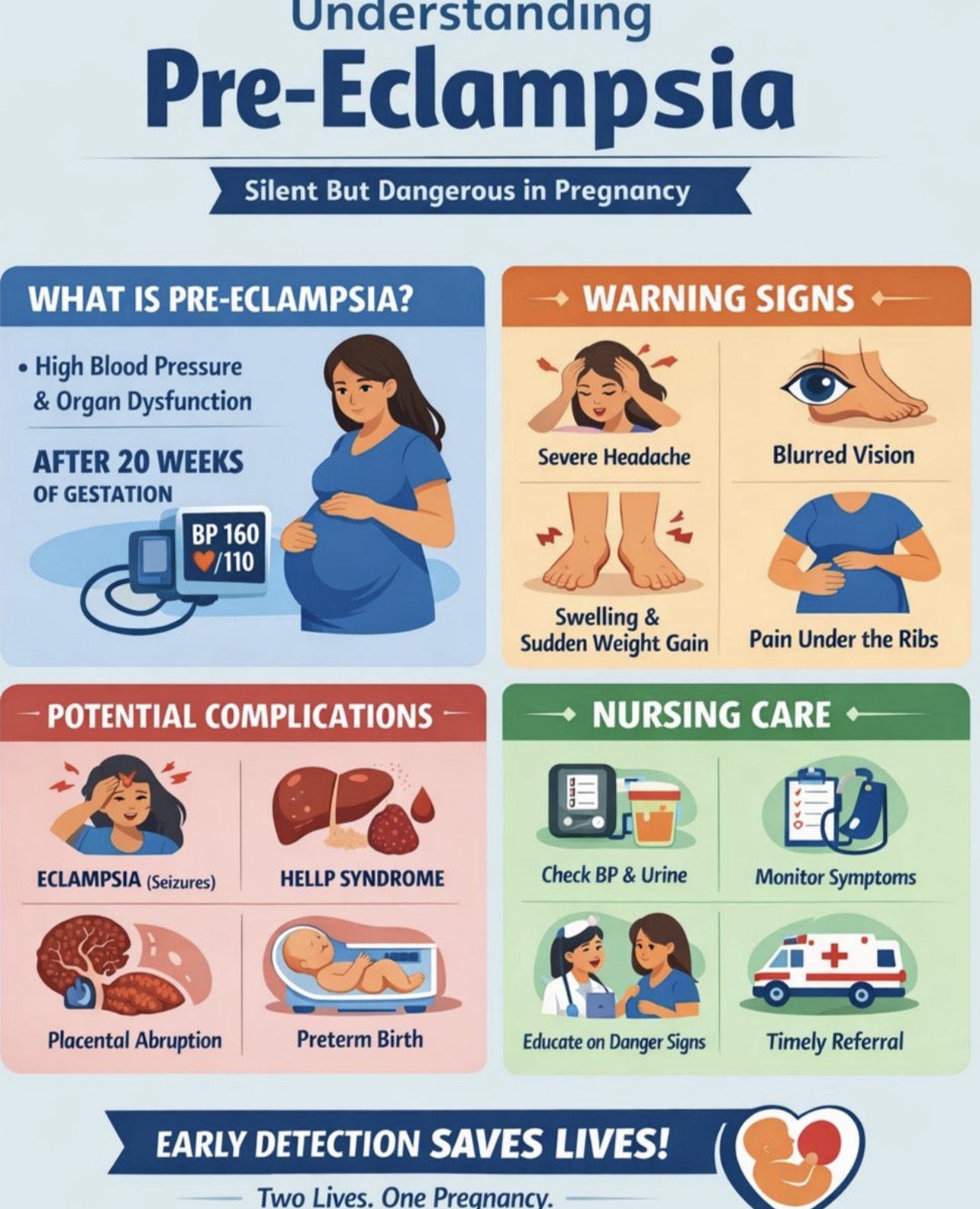
Pre-eclampsia is a pregnancy-specific hypertensive disorder, usually transpiring after 20 weeks of gestation, characterized by elevated blood pressure, proteinuria and/or signs of end-organ involvement. Not all danger presents loudly, some conditions develop quietly, mild oedema, no obvious pain, while the blood pressure readings reveal a very different clinical picture.
The tricky part?
A woman may look well, walk in confidently, and still have a Blood Pressure reading of 160/110 mmHg.
That’s why routine antenatal monitoring is not optional, t’s lifesaving.
🩺During antenatal care, clients are examined for persistent hypertension, protein in urine, sudden weight gain, generalized oedema (especially face and hands), headache, blurred vision, and epigastric pain.
📌The above are not “normal pregnancy symptoms.” They are red flags 🚩.If undetected or poorly managed, pre-eclampsia can progress to:
Eclampsia
- Placental abruption
- HELLP syndrome
- Fetal growth restriction
- Maternal and fetal morbidity or mortality
To pregnant women reading this:
Feeling “fine” does not replace clinical assessment.Please attend your antenatal visits, even when you feel okay.
Pre-eclampsia doesn’t always announce itself loudly. Sometimes, it whispers.
🩺 Early detection saves lives.
👶🏽👩🏽 Two lives, one pregnancy.
💬 Nurses & midwives, what early sign of pre-eclampsia do you emphasize most during patient education?