
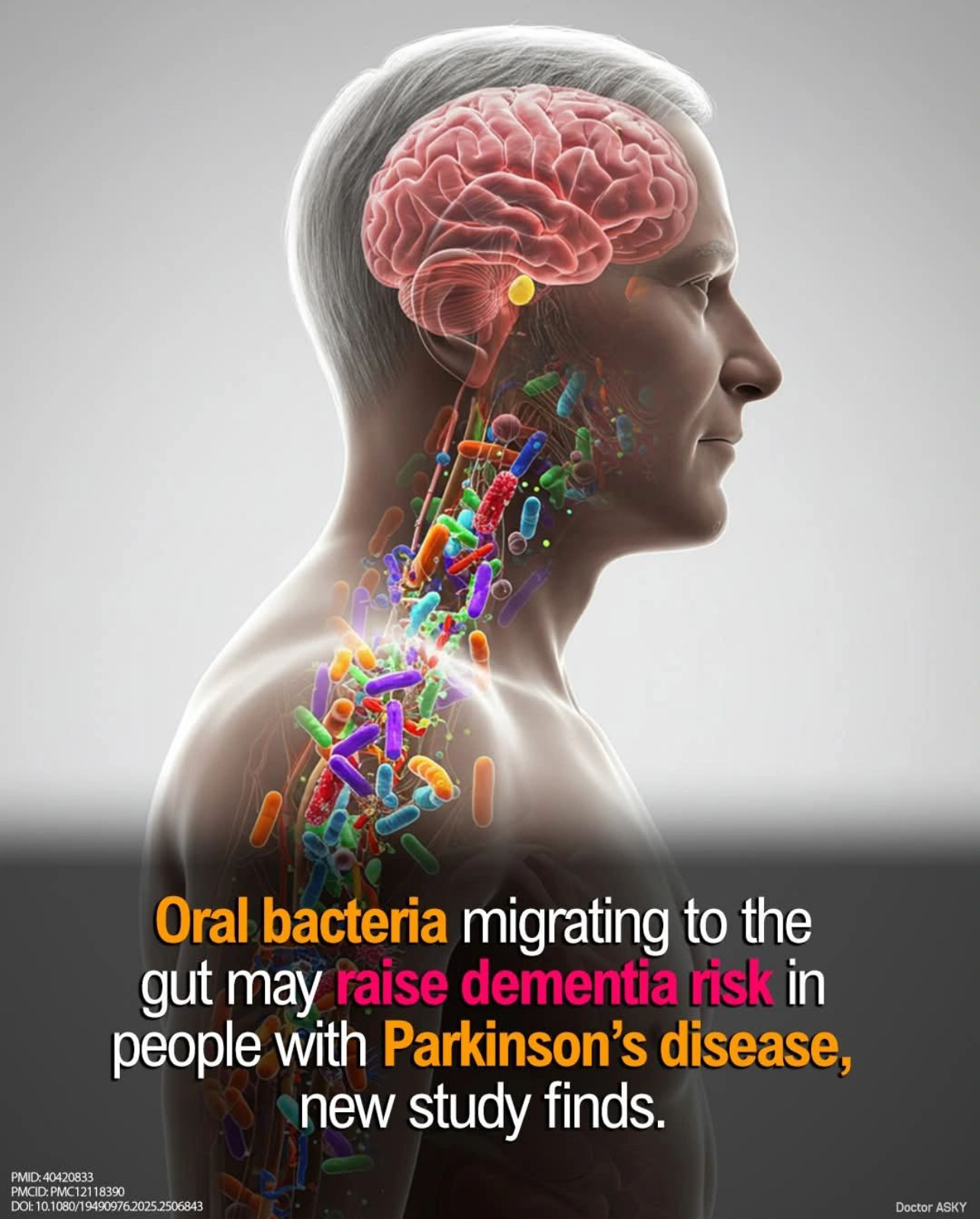
A fascinating new study reveals that bacteria from the mouth could travel to the gut and possibly speed up cognitive decline in people with Parkinson’s disease. Researchers at King’s College London examined saliva and stool samples from patients with Parkinson’s—some with mild memory issues, others with dementia—and compared them to healthy people. They discovered that patients showing worse cognitive symptoms had more harmful bacteria in their guts, many of which likely originated in the mouth. This process, called “oral-gut translocation,” means bacteria that are normally harmless in your mouth could turn dangerous when they settle in your intestines.
These bacteria don’t just sit there—they release toxins known as virulence factors that can damage gut tissue, trigger inflammation, and might even harm the brain. Using artificial intelligence, the scientists connected specific bacterial toxins directly to the severity of cognitive decline, suggesting these toxins could become future warning signs for who’s at higher risk of dementia in Parkinson’s. They might even offer new targets for treatments aimed at protecting the brain by changing the gut environment.
The study highlights just how closely linked our gut and brain health really are. It also stresses the importance of basics like regular dental care and good nutrition, especially since people with Parkinson’s may become more dependent on caregivers who could overlook these daily routines. Keeping your mouth and gut healthy might turn out to be one more way to slow down or ease the cognitive complications of this tough disease.
Research Paper 📄
PMID: 40420833
PMCID: PMC12118390
DOI: 10.1080/19490976.2025.2506843