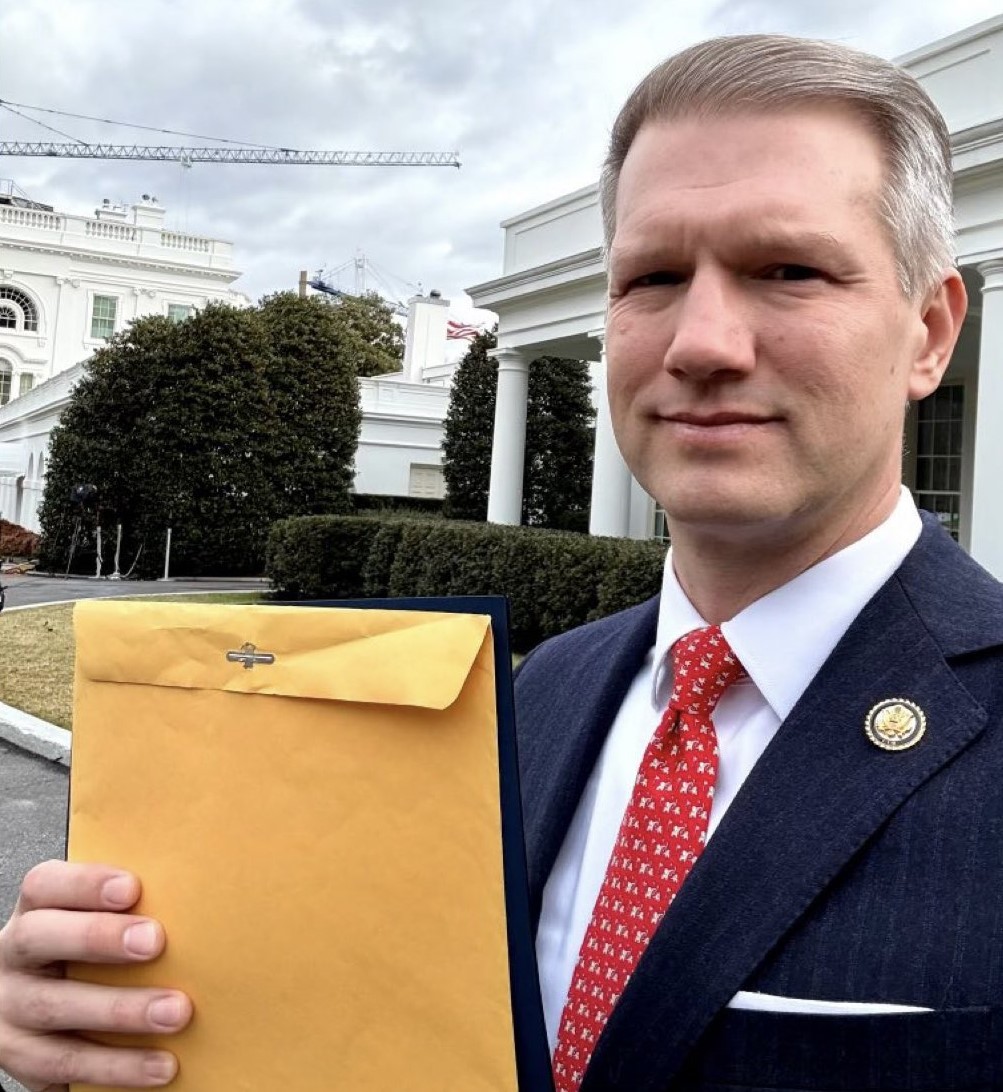
On February 23, 2026, U.S. House Committees on Appropriations and Foreign Affairs, led by Rep. Riley Moore (R-WV) and including members from the Africa Subcommittee chaired by Rep. Chris Smith (R-NJ), delivered a comprehensive joint report to the White House on the ongoing persecution of Christians in Nigeria.
The report, following President Donald Trump’s redesignation of Nigeria as a Country of Particular Concern (CPC) for severe religious freedom violations, describes Nigeria as “the deadliest place in the world to be a Christian.” It highlights decades of systemic violence against Christians by jihadist groups like Boko Haram, ISWAP, and Fulani militias, including mass killings, church destructions, kidnappings, rapes, and forced displacements, resulting in tens of thousands of Christian deaths (estimates range from 50,000 to 125,000 since 2009), thousands of churches attacked, and massive internal displacement, particularly in the Middle Belt region.
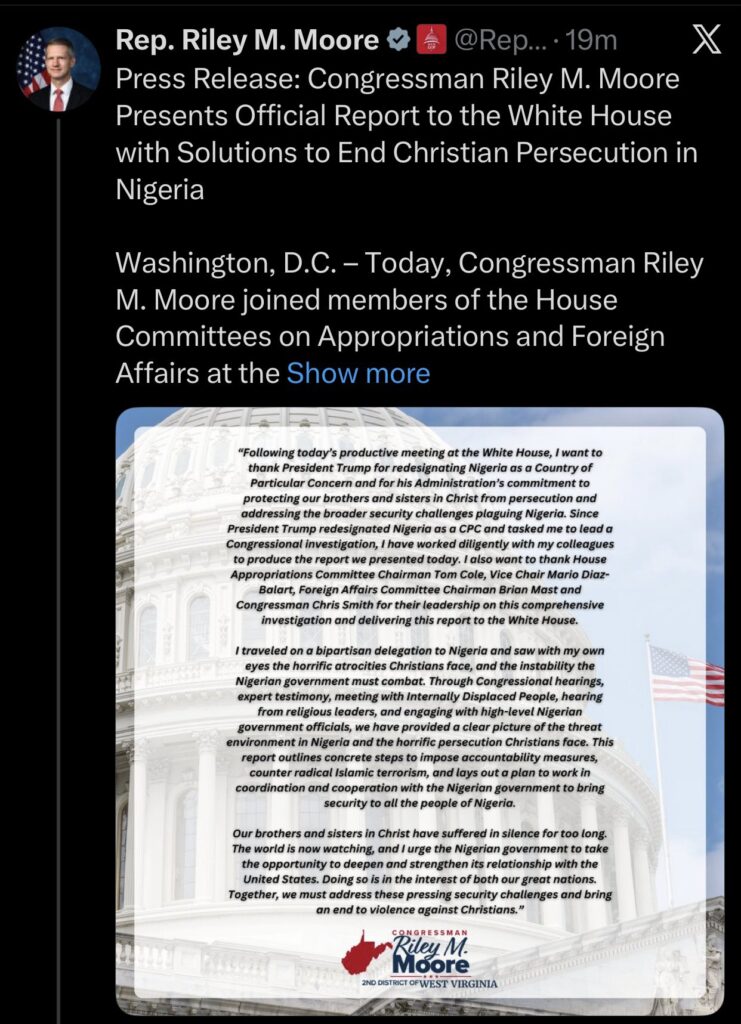
The document cites blasphemy and Sharia laws in northern states as tools to target Christians and minorities, often without due process, and notes recent escalations such as major massacres in Benue and Plateau States. Investigations involved expert hearings, roundtables, bipartisan congressional delegations to Nigeria, meetings with displaced persons and religious leaders, and engagements with Nigerian officials. Key recommendations for U.S. action include:
- Establishing a bilateral U.S.-Nigeria security agreement to protect vulnerable Christian communities, dismantle jihadist networks, enhance economic cooperation, and counter influences from adversaries like China and Russia.
- Withholding certain U.S. funding to Nigeria until demonstrable steps are taken to halt violence against Christians.
- Imposing targeted sanctions and visa restrictions on perpetrators and supporters of anti-Christian violence.
- Demanding repeal of Sharia and blasphemy laws.
- Supporting demobilization, disarmament, and reintegration programs for armed groups, land restitution for displaced farmers, and international partnerships (e.g., with France, Hungary, UK).
- Implementing FY26 appropriations measures conditioning aid on progress.
The report follows earlier legislative efforts, including the Nigeria Religious Freedom and Accountability Act of 2026 (H.R. 7457), introduced in February 2026 by Reps. Moore and Smith, requiring a detailed State Department report on U.S. efforts against religious persecution in Nigeria. In response, Nigeria’s Federal Government, via Minister of Information Mohammed Idris, rejected claims of state-sponsored religious persecution, describing incidents as general security challenges from terrorism, banditry, and communal conflicts, not religious bias. The government emphasized constitutional protections for all faiths and commitment to equal protection under the law, while noting ongoing diplomatic engagements.
The development underscores heightened U.S. scrutiny amid Nigeria’s security crisis, with calls for accountability to protect religious freedom and counter extremism.