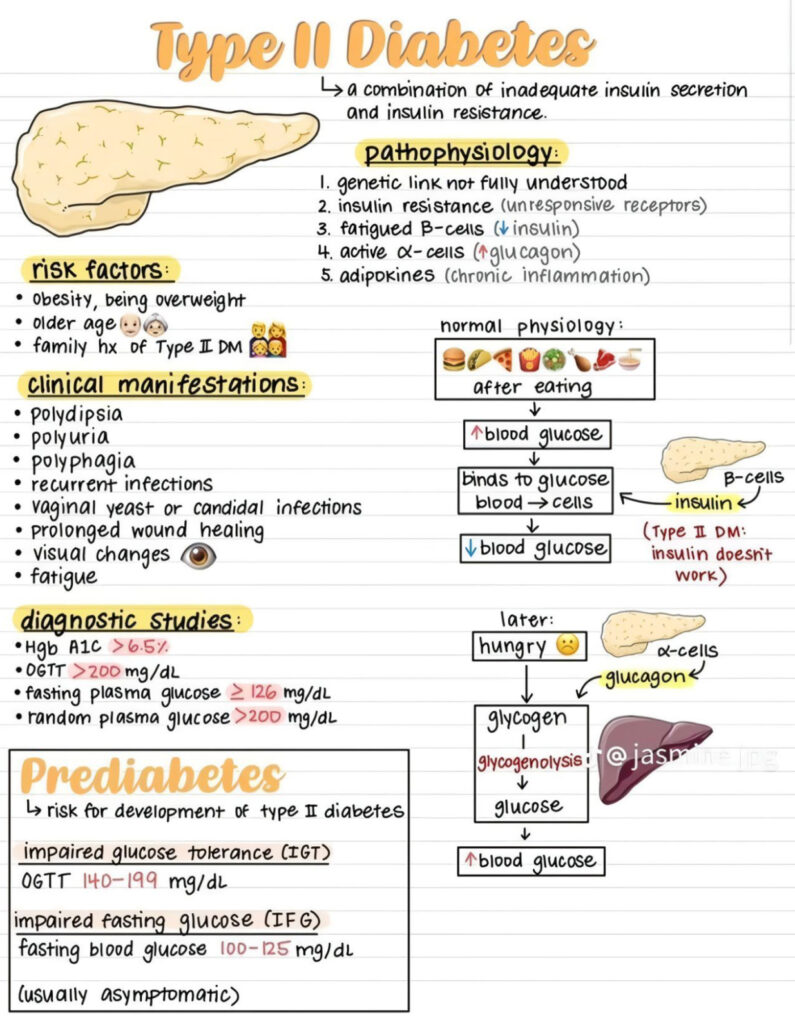
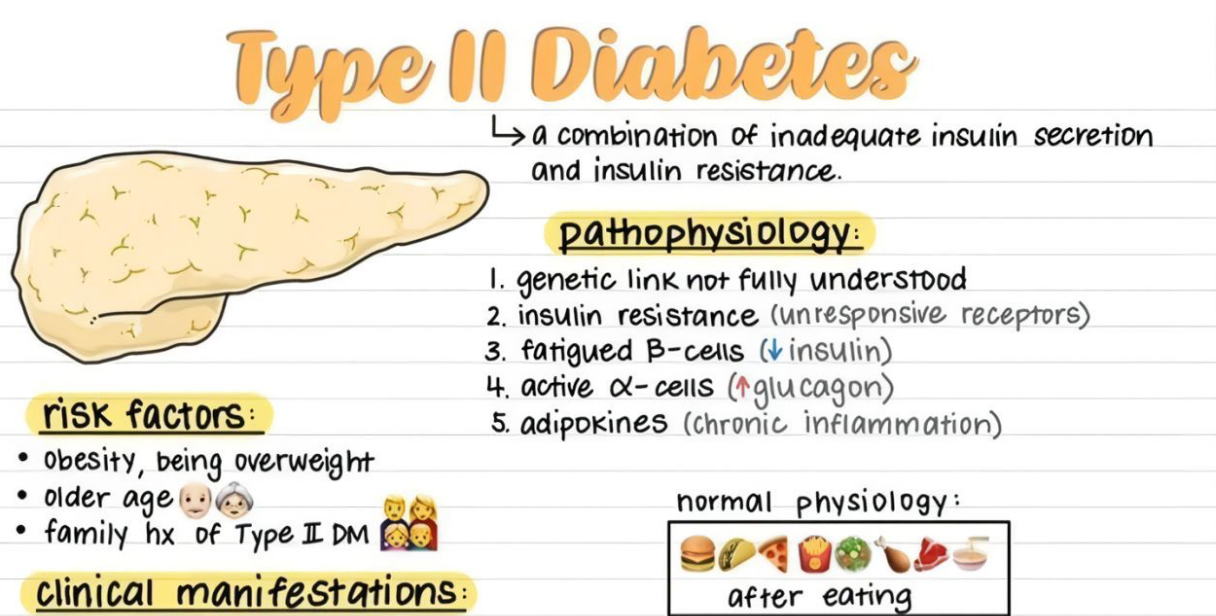
Type II Diabetes is a chronic metabolic disorder marked by the body’s resistance to insulin and progressive dysfunction of pancreatic beta cells, resulting in persistently high blood sugar (hyperglycemia).
🧬 What happens in the body?
Cells become insensitive to insulin, making it harder for glucose to enter and fuel them.
Over time, beta cells in the pancreas struggle and fail to produce enough insulin.
Meanwhile, alpha cells continue secreting glucagon, a hormone that raises blood sugar levels—further aggravating the problem.
Chronic inflammation and adipokines (from fat tissue) worsen insulin resistance.
⚠️ Symptoms to watch for include:
Excessive thirst and urination
Constant hunger
Fatigue and blurred vision
Frequent infections and delayed wound healing
🧪 Diagnosis is confirmed through:
HbA1c ≥ 6.5%
Fasting glucose ≥ 126 mg/dL
OGTT ≥ 200 mg/dL
Random glucose ≥ 200 mg/dL (with symptoms)
💡 Why it matters:
After meals, blood sugar should decrease thanks to insulin. In Type II Diabetes, this mechanism fails—leading to long-term health risks if unmanaged.
🟢 Awareness, early detection, and lifestyle changes remain critical tools in prevention and management.
#DiabetesAwareness #PublicHealth #Endocrinology #ChronicDisease #HealthEducation #Type2Diabetes #Biology #Metabolism