Understanding liver health is essential in diagnosing a wide range of conditions – from hepatitis to alcohol-related damage and even certain bone disorders.
This post breaks down the LFT panel and what each component indicates. 🔍
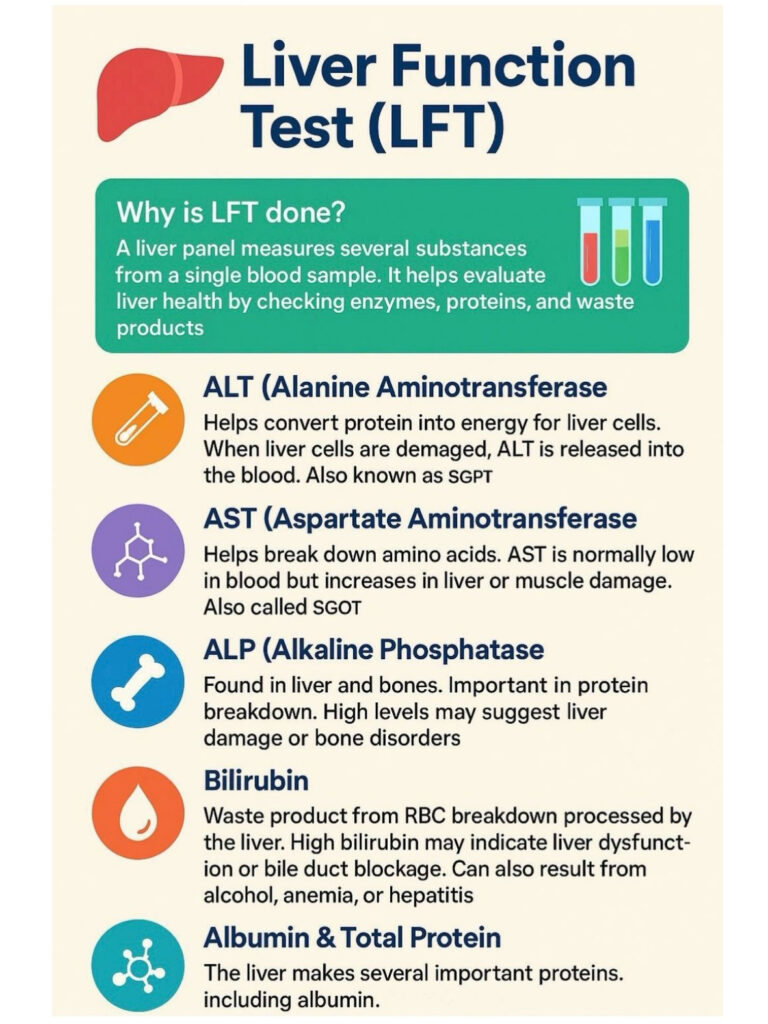
🔬 Why is LFT done?
A single blood sample is analyzed to check various substances, helping evaluate liver function by measuring enzymes, proteins, and waste products.
Here’s what each parameter tells us:
\
1️⃣ ALT (Alanine Aminotransferase) – Converts protein into energy for liver cells. Elevated levels? It may indicate liver cell damage (also called SGPT).
2️⃣ AST (Aspartate Aminotransferase) – Helps break down amino acids. High levels may point to liver or muscle damage (also called SGOT).
3️⃣ ALP (Alkaline Phosphatase) – Found in liver and bones. High ALP could mean liver damage or bone disorders.
4️⃣ Bilirubin – A waste product from red blood cell breakdown. High levels may indicate liver dysfunction, bile duct blockage, or conditions like hepatitis.
5️⃣ Albumin & Total Protein – Reflect the liver’s ability to produce essential proteins. Low levels may suggest impaired liver function.
🧠 Clinical Insight:
Early detection through LFT can help prevent complications, guide treatment, and monitor recovery.
📈 Whether you’re a medical student, laboratory technologist, or healthcare worker, understanding these parameters is key to better patient outcomes.
👉 Follow me for more diagnostic insights in Medical Laboratory Science.
Let’s learn, grow, and elevate clinical understanding — together. 🌱
LiverFunctionTest #LFT #MedicalLaboratoryTechnology #ClinicalDiagnostics #Pathology #ALT #AST #ALP #Bilirubin #Albumin #HealthcareEducation #LaboratoryMedicine #LearnWithMe #SaifUrRehman
Follow Saif ur Rehman for more Medical Laboratory Insights!